SupportNetworkSupported Independent Living in Parramatta
Finding the right SIL support in Parramatta shouldn’t mean long waitlists or rotating strangers. Support Network connects you directly with screened, local workers you choose yourself.
- SIL and SDA vacancies
- Rostered support teams
- Choice and control for residents
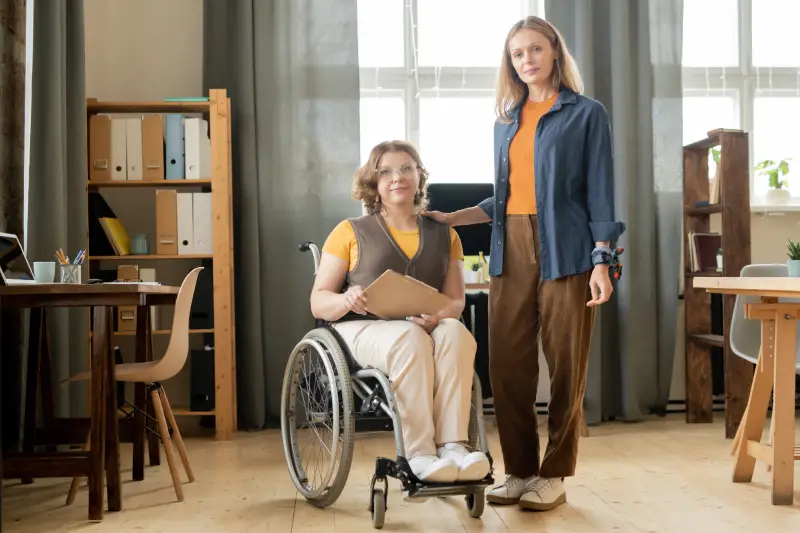
Living independently with the right team
Supported Independent Living (SIL) helps people in Parramatta live as independently as possible in a shared or individual home, with rostered support for daily tasks.
Support Network connects participants, families and providers with SIL vacancies and with skilled workers to staff homes reliably.
- Help finding SIL and SDA vacancies
- Matching residents and housemates
- Workers for rosters, overnights and cover
- Support with routines and skill building
Why people in Parramatta choose us
Screened workers
Every worker passes police and Working With Children checks before they can be booked.
Lower fees
A 6% client fee means more of your funding goes into actual support hours.
Your choice
Pick workers by skills, languages, gender, interests and availability.
Compliance handled
Records, invoices and insurance are managed through the platform.
Support available in Parramatta
Daily living & life skills
Housework, meal prep, shopping, transport and building everyday skills.
Personal support
Showering, dressing, hoist transfers, mobility and continence support.
Nursing services
Wound care, medication management, catheter and complex clinical care.
Allied health
Occupational therapy, psychology, physiotherapy and speech therapy.
Specialised disability support
Workers experienced with complex needs, behaviours and conditions.
24 hour & overnight support
Build a rostered team for around-the-clock or sleepover care.
Getting started is simple
Sign up
Create your free profile in a few simple steps.
Search
Browse screened local workers by skills, languages and availability.
Connect
Message workers, meet them, and choose the people who fit.
Relax
We handle payments, records and admin so you can focus on living.
Supported Independent Living in Parramatta: common questions
Who is SIL for?
NDIS participants with higher support needs who need help with daily tasks most of the day.
Are there SIL vacancies in Parramatta?
Vacancies change often. Contact us and we’ll share what’s currently available.
Is SIL the same as SDA?
No. SDA is the funded housing itself; SIL is the support provided within the home.
Can providers use Support Network for staffing?
Yes — providers use us to fill roster gaps and build stable teams.
More services in Parramatta
Supported Independent Living in other areas
Need extra help? We are always available for you.
Our dedicated team can help you find support workers and manage your support whenever you need it.
Let’s figure it out together
No pressure. No confusion. Just clear, kind guidance — one step at a time.
We help you find a home that's right for you
-
Great Value
-
Local NDIS Provider
-
Culturally Matched Support Workers
-
Nurse On-Call
Daily living, life skills, community activities
Housework, organising transport, gardening, meal prep, chores, activities.
Showering, hoist transfer, exercise assistance, palliative care, 24 hr support, complex support
Wound care, medication management, respite support, 24 hr care, complex care.
Support for complex needs, behaviours and conditions
Complex Support
Tailored support & clinical support for complex health needs.
24 hr Support
Create a team to support with all your requirements
Behaviour Support
Support to achieve positive solutions & change
Additional services to support you:
-
Plan Management
-
Behavior Support
-
Specialised Disability Accommodation
-
Support Coordination
Here’s why you’ll love Support Network
-
Approved database of care workers
We have a rigorous approval process for all the care and support workers on our database
-
We care about your safety
All workers on our site must have police and Working With Children Checks
-
We are always available to help
Please get in touch if you have any questions or concerns
-
Insurance for peace of mind
We provide liability insurance for Support Workers. Click here for more info.
-
Secure Payment System
Only release payment when the task is completed to your satisfaction.
-
Large Range of Skill-Sets
Choose from a range of speciality services.
-
We save you
We save you money, so you get more care
-
Leading Clinicians
We strive to provide leading Clinicians
How Support Network works
-
Sign Up
To start, set up your own profile following our simple steps.
-
Search
Search through our curated database of quality support and care workers.
-
Connect
Get in touch with support workers directly and hire the person who is right for you.
-
Relax
Our system handles the payment process and admin, making things easier for you.
A local network of quality support and care workers is right at your finger-tips.
We make it easy for you to connect with the right care and support worker for your family. Start looking for someone today.
Trusted NDIS SIL Provider in Parramatta
Support doesn’t always need to look big to mean something. Sometimes it’s just about having someone around who understands how your day works, and what makes it easier to get through. That’s what we focus on here. We build homes where people feel okay, where things are calmer, where there’s no rush to be something you’re not.
We don’t treat support like a checklist. Every person we work with has their own way of living. So we start there. We talk. We sit down with the family. We look at the support plan, but we also listen to what’s really going on. If someone needs a place where they can breathe and feel settled, we build it around them. If they need space to grow and try things on their own, we create that too.
Each living arrangement is different. Some people want help with showers or medication. Others just need someone nearby, in case they feel off. Some want to cook on their own but need a bit of help with shopping or planning the week. Our support workers know how to blend in, stay close without taking over, and make life feel more stable.
We’re a trusted NDIS SIL provider in Parramatta not because we say the right things, but because we show up the right way. Quietly, properly, and always based on what the person actually needs. No pressure, just steady help that makes the day feel easier. That’s what it comes down to.
What’s Included in Our Supported Independent Living Homes in Parramatta
We don’t think in terms of services. We think in terms of days what a day looks like when someone wakes up, how it flows, and where the hard parts are. That’s how we work out what to offer. It’s not about ticking boxes. It’s about filling the little gaps that wear people down. Whether it’s brushing teeth, sorting meds, calling a doctor, or just feeling less alone we step into those spaces and make them lighter.
Here’s what we help with, depending on what someone needs.
Personal care
Help with showers, brushing, getting dressed done slowly, kindly, and without fuss. It’s about helping someone feel ready without rushing them.
Household tasks
We clean, cook, do laundry, and take out the bins. Some people join in, some leave it to us. Either way, the space stays clean and calm.
We sort doses, set reminders, keep track. No mix-ups. No guessing. It’s all kept steady and checked.
Health and wellbeing
We help book check-ups, go to appointments, follow care routines. If something changes, we notice and act.
If someone needs to be somewhere a class, the shops, an event we help them get there. It’s not just driving. It’s being there the whole way.
Financial management
We go over budgets, pay bills, help with spending. Some people need full support. Others just want a hand now and then.
Community participation
We support people to join things they care about, groups, clubs, meet-ups. We help plan and make it happen without stress.
Skill development
We don’t push, but we guide. How to cook a meal. How to use the washing machine. How to plan a day. These are skills, and we help build them.
Behavioural support
When behaviours feel hard to handle, we bring in someone who listens and works with the person not against them. It’s all about finding balance.
Assistive technology
We help pick and use tools that make things easier mobility aids, communication tools, smart devices. We help set them up and get used to them.
Social and recreational activities
Outings, games, art, movies, park walks. We plan around what brings joy. Everyone needs fun, not just care.
Employment and education support
If someone wants to study or work, we help with the steps planning, getting there, sticking to it, and balancing other support.
Crisis and emergency support
If something unexpected happens, we’re ready. Support workers stay close. There’s always someone to call or reach out to.
Communication support
We help people express themselves through apps, pictures, sign, or speech. We learn how they speak, not just how we expect them to.
Coordination of supports
We bring together therapists, families, doctors, everyone involved so things don’t clash. One smooth path instead of five separate ones.
Daily living skills training
We help build the basic things: meal planning, hygiene, making calls, shopping. Nothing rushed. Just patient support.
Respite care
Short stays to give families a break, or to try new routines. Sometimes it’s at home, sometimes away. The support stays steady either way.
We don’t drop a service list and walk off. We stay. We listen. We work things out in real time, not by script. Each person moves differently through the day, and we follow their lead, making sure nothing feels too heavy or too out of reach.
What Supported Independent Living Really Means
It’s not about defining anything. It’s about what changes when someone finally gets the kind of help that fits. When support starts matching the pace of the person, not the system. That’s when SIL starts to work.
Someone might not say much. But they notice when they don’t need to ask for help every five minutes. They notice when they wake up and breakfast is just quietly sorted. When clothes are clean. When no one is rushing them out the door. That’s what SIL does. It makes the day feel like it can be lived not survived.
For people living with a mental health condition, or any kind of functional impairment, the world can feel like it’s moving too fast. SIL slows it down, just enough. Supportive accommodation can look, different shared homes, apartment living, community housing but the shape doesn’t matter as much as what’s inside it. Support that meets them where they are. That holds them steady without holding them back.
And that’s where confidence starts to return. Not from big steps, but from the smallest ones that happen over and over again.
The Different SIL Options We Offer in Parramatta
There’s no single right way to live. One person needs quiet and space, another does better with company. Someone might be ready to live on their own, someone else might want support close at all times. What we do is listen first, then suggest what might fit. It’s not a list, it's a conversation.
Shared Living in Community Houses
This works well when people like being around others. Everyone has their own bedroom, but kitchens and lounges are shared. Some talk, some keep to themselves. It’s calm. Support staff help out with meals, meds, laundry whatever the person needs. It’s steady and social, but no pressure.
Self-Contained Units and Apartment Living
If someone prefers privacy, this option gives space without cutting off support. Staff drop in every day, or stay longer, depending on the plan. People cook their own meals, decorate their place, live quietly. But there’s always someone to call if needed. Works well for those managing mental health needs or rebuilding skills.
Short Term Accommodation (STA)
Sometimes families need a break. Or someone’s in between homes. STA gives a temporary stay with full support, so no one is left in limbo. It’s safe, quiet, and designed to keep things moving forward while decisions are being made.
Specialist Disability Accommodation (SDA)
Some people need homes built with care wide hallways, accessible bathrooms, space for assistive devices. SDA houses are made for that. But it’s not just about the design, it's about making sure the person feels okay there. We help choose, settle, and adjust support to match.
Trial or Transitional Living
Things don’t always land perfectly on the first try. Trial stays help test what kind of setup suits best. For some, it’s their first time away from home. For others, it’s a way to move forward without pressure. These options give breathing space.
We’ve got SIL houses and NDIS housing options across Parramatta. But more than that, we’ve got time for people to sit with them, talk through what feels right, and help them get there at their own pace.
Why Families in Parramatta Trust Us With Their SIL Support
Trust isn’t something we say we offer. It’s something people come to feel, after watching how we show up. Families in Parramatta don’t come to us looking for a sales pitch. They come when someone they know tells them what we’re really like.
They say we’re the ones who pick up on the early signs when a person starts skipping meals, sleeping less, pulling away. And we don’t wait to be told. We act. Not big, showy changes, just small, steady shifts that keep someone on track without disrupting their rhythm.
- We see what’s not said. Mood, sleep, behaviour our team pays attention before it becomes a problem.
- We respond quietly. Adjustments happen without back-and-forth. It just gets done.
- We keep the circle strong. Support Coordinators hear from us regularly. We don’t leave people guessing.
- We keep faces familiar. Staff are matched with care. No revolving door.
- We stay steady in tough moments. Whether it’s a crisis call or a difficult day, we show up clear, calm, ready.
Support Coordination or Specialist Support Coordination it all comes down to people. People who care enough to stay present. That’s what families remember. That’s why they stay.
What You Need to Know Before Applying for SIL
You’re not expected to know everything. No one hands you a clear map when you start this process. The system’s not simple but that doesn’t mean you have to go through it alone. That’s where we come in. We don’t take over, we walk beside you. At each step, we explain what’s going on, and why it matters. You ask questions we answer. You get stuck, we pause. We’re used to the bumps and we know how to move around them.
SIL starts with an NDIS plan. But even before that, it often starts with signs when everyday things become harder to manage. Maybe it’s memory gaps, fatigue, stress from small tasks piling up. Sometimes an Occupational Therapist steps in to do a functional assessment, or someone raises a flag during a planning meeting. You don’t need to have all the pieces together before reaching out. That’s what we’re here to help with.
Here’s the kind of things that usually come up:
- A functional impairment that makes daily living hard physically, mentally, or both
- A mental health need that affects how someone manages at home or in the community
- The need for ongoing help at home, not just once or twice a week
- Support with getting a residential tenancy agreement, so housing is secure
- Making sure all the reports are in place before the plan is reviewed
- Clarifying what level of NDIS funding is needed to make SIL realistic
No one expects you to walk into this with it all figured out. You don’t need to speak in funding terms or know what to write on forms. You just need to be honest about what life feels like right now and we’ll work from there.
How We Help You Find the Right SIL Home in Parramatta
Finding a SIL home isn’t just about ticking off boxes. It’s about understanding what a person needs, even before they say it out loud. A quiet street. A room with morning sun. A place that’s close to family or far from too much noise. It’s in these details that the right home starts to take shape. And that’s where we put our focus not on listings, but on lives.
We don’t rush to place people. We take time. We sit with the person, see how they move through their day. What lights them up. What drains them. We ask small things: Do you like cooking? How do you feel about sharing a bathroom? Would you rather look out on trees or a courtyard? That’s the kind of information that shapes real support in the home, not just logistics, but what makes it feel okay to wake up there each day.
We work with local property managers, but not just to find vacancies. We check if the house feels right. If the space allows for calm routines, outdoor time, and the kind of flow a person’s used to. We look at how support will actually work in that home not in theory, but day-to-day.
Sometimes the right housing opportunity takes a while to show up. And when it does, there’s paperwork, yes, a residential tenancy agreement, plus a few other steps. But we handle it together. Step by step, not all at once.
Because in the end, it’s not just about the home. It’s about who someone can become once they’re in it.
What kind of support services are offered through Supported Independent Living?
Support in our SIL homes goes beyond just daily tasks. We help with personal routines, medication reminders, meal prep, and anything else that fits into your day-to-day. But the real focus is on stability, support services are built around your needs, not the other way around. It’s about shaping daily life so you can settle, grow, and feel like yourself again.
How do you figure out what support needs a person has?
We don’t guess. We sit down, listen, and take time to understand what makes someone feel comfortable, capable, and calm. Some people need help with the basics. Others need 24/7 support. Whatever your support needs are, we build a plan around them, using your Core Supports wisely and always adjusting when life changes.
Is community access part of the support you provide?
Absolutely. Staying connected with the local area is just as important as having a safe home. We support community access in a way that fits each person, whether that’s joining a local art group, going to the gym, or just being able to do your own shopping. It’s about finding the right level of support so you can be part of something outside your front door.
What are Core Supports and how do they work with SIL?
Core Supports cover everyday things, help with meals, personal care, or getting to appointments. When someone’s in a Supported Independent Living home, we work closely with their Core Supports to keep everything flowing. It’s a balance. We make sure funding goes where it makes the biggest difference, without overcomplicating anything.
How does disability support encourage community engagement?
Disability support isn’t just about what happens inside the home. We put a strong focus on community engagement, because feeling part of something larger brings confidence, purpose, and joy. From volunteering to local events to casual meetups, we make sure there’s room for people to connect, share, and show up as themselves.