Behaviour Support NDIS
Our NDIS Behaviour Support brings together families, carers, and support workers to create a cohesive strategy that enhances wellbeing, relationships, and progress.
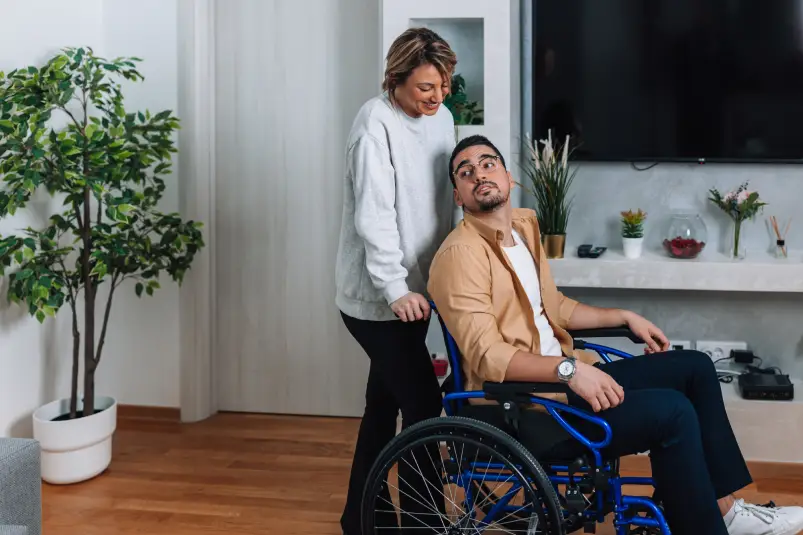
Behaviour Support Services in Australia
Are you or your loved one struggling with challenging behaviours?
It can be difficult to live with or care for someone who exhibits challenging behaviours. However, you don't have to face this alone, whether it's trouble speaking, or private hobbies.
At Support Network, we are a qualified NDIS provider, and we focus on encouraging independence. To achieve long-term results, we offer Behaviour Support service to provide premium care for all our clients.
Let our experts guide you on your path to positive change!
What exactly is NDIS Behaviour Support?
Many people miss out on NDIS Behaviour Support because they don’t understand how it works.
NDIS Positive Behaviour Support (PBS) helps individuals manage challenging behaviours with structured techniques.
Instead of reacting, PBS focuses on:
- Identifying triggers and patterns.
- Developing practical solutions.
- Building confidence and life skills.
Each person gets personalized support based on their needs, environment, and goals.
Our PBS services at Support Network facilitates:
- Better communication.
- Establishing organised routines.
- Increasing independence and concentration.
To maintain consistency, our NDIS Behaviour Support brings together families, carers, and support workers to create a cohesive strategy that enhances wellbeing, relationships, and progress. Our goal is to provide personalised support that is tailored to the client’s specific needs.
Get the Right Support today!
Book a free consultation today- call now!
Who can Benefit from Our Positive Behaviour Plans?
We help individuals with:
- Autism Spectrum Disorders (ASD)
- Intellectual impairments.
- Mental health conditions
- Neurological disorders
- Disabilities in physical or sensory functions.
We can help to create a stable environment and encourage independence and self-regulation.
You Deserve the Right Support!
Get Started Today
How NDIS Behaviour Support Plans work
Without a plan that works, managing challenging behaviour like anxiety or aggression can be difficult. Many people struggle to actualise their plans. But with the right NDIS Behaviour Support Plan (BSP) you can manage behaviours with proven strategies.
At Support Network we provide support that:
- Tracks progress for lasting success.
- Find triggers in order to avoid problems.
- Put proactive improvement solutions into action.
Let’s Build a Plan That Works for You!
Speak to a Behaviour Specialist
Our Method
Our goal at Support Network is to help people flourish, not control their behaviour.
Our approach is:
- Person-focused: Adapted to each person's needs.
- Evidence-based: Supported by studies.
- Built for lasting change: Supporting individuals and families.
Getting to Know the Individual
Every person is unique, and so are their behaviours. That's why we start with a detailed assessment to identify their strengths, triggers, and goals. With these insights, we develop a tailored Behaviour Support Plan (BSP) that suits their needs, daily routines, and personal aspirations.
Positive & Proactive Strategies
We use Positive Behaviour Support (PBS), which focuses on understanding why behaviour is happening and on acquiring new, positive responses. Also, we proactively develop prevention tactics to stop troublesome behaviours from occurring at all, as opposed to only reacting when they do.
Collaborating with families and carers
Effective Conduct assistance encompasses the complete system of assistance, not just the individual. In order to ensure that techniques are applied consistently in home, school, and community contexts, we provide education and guidance to families, carers, and support staff.
This helps to establish a helpful, orderly, and predictable workplace.
Adaptable and Tailored Assistance Programmes
A one-size-fits-all strategy for behaviour support does not exist. We create customised support programmes that evolve over time. We constantly assess and modify the tactics to guarantee continued success as the person develops and their demands change.
Continuous Enhancement & Progress Tracking
We don't just plan. Our employees offer continuous assistance, keeping an eye on developments and making adjustments as necessary. Continuous evaluations, assessments, and fine-tuning ensure that the person is gaining the abilities necessary to lead a more autonomous and satisfying life.
Turn Everyday Struggles into Success Stories—We’ll Show You How!
Our Behaviour Support Plans:
You cannot use a generic approach in Behaviour Support.
Every individual presents different challenges and needs an individualised programme, for change.
So, we offer several types of Behaviour Support Plans to meet the differing needs. We have identified, from short-term guidance through to long-term intervention.
Each plan helps an individual's goals, challenges and personal circumstances.
Our Plans:
Short-Term Behaviour Support Plan
It is perfect for individuals who need immediate guidance and quick intervention.
It takes 3-6 months which includes initial assessment, behavior strategies, and caregiver training. It is suitable for emerging behavioural challenges or specific short-term goals.
Standard Behaviour Support Plan
A comprehensive plan for individuals needing structured, ongoing support.
It takes 6-12 months. This plan includes Functional Behaviour Assessment (FBA), individualized support strategies, and regular progress reviews.This is good for those with chronic behavioural issues that need significant follow-up.
Intensive Behaviour Support Plan
A high-level support plan for complex behavioural needs. The duration is 12+ months. It comprises advanced assessment, restrictive practices review, continuous monitoring, and hands-on caregiver training.
It is best suited for situations needing expert intervention.
Additionally, this is a long-term strategy as well as severe or high-risk behaviours.
Family & Caregiver Behaviour Support Plan
It is designed to empower families in the effective management of behavioural challenges. This is usually a flexible plan that includes training for parents and caregivers to reduce stress. It is best for families and support workers who need practical tools to create a positive home.
Youth & School Behaviour Support Plan
Centred on aiding children and adolescents within educational and social contexts. It takes 6-12 months and school-based interventions and social skills training. Children who need help in behaving at school, and interacting can enjoy this plan.
Let’s Build a Plan That Works! [Get Started Today]
Why should you choose our NDIS Behaviour Support Services?
It's clear, behaviour support services don't work the same way for everyone. Most of them lack a personal touch and end up leaving individuals and families unheard. We understand the uniqueness, needs, challenges, and goals of individuals. This is the exercise our skilled Behaviour Support Practitioner team engages individual persons, families, and caregivers to develop genuinely individualized and effective performance support plans.
Our benefits include:
- Personalised and ethical approach.
We create personalised behaviour support plans tailored to each individual's unique requirements.
- Trained and certified professionals.
Our NDIS Behaviour Support Practitioners specialise in disability support, psychology, and behavioural therapy.
- Australia-Wide Support
In both Australia and remote communities we provide Behaviour Support services.
Expert Guidance, Ethical Support, Real Results—Work With a Trusted Team!
What Sets Us Apart?
Our NDIS is Registered & Approved – Our compliance with NDIS guidelines for Behaviour Support is provided.
You can count on experienced professionals – our team includes certified psychologists, therapists, and behaviour analysts.
- Individualized Plans : Support strategies tailored to address specific challenges and goals.
- Ongoing Support & Adjustments : Plans are monitored and adjusted to fit individual needs.
- Holistic and Ethical Approach: We focus on positive reinforcement and minimal use of restrictive practices.
Get Support From a Team That Cares! [Talk to a Specialist]
Why Our Early Behaviour Support is Important
If you wait too long before seeking Behaviour Support challenges can be difficult.
- More frustration for the individual, family, and caregivers.
- More difficulty in ending those unwanted behaviours.
- Social and emotional opportunities lost.
- Greater stress and uncertainty with daily routines.
When challenging behaviour is not addressed, it worsens, and thus, it becomes harder to manage later on. Early intervention provides a solid foundation for long-term behavioural success and allows individuals to navigate around their environment with greater confidence and independence.
Don’t Wait—Start Today for Better Results!
How our Early Behaviour Support Helps
Speedier Progress & Skill Development
Children and adults learn a new skill quicker when they are given behavioural support earlier. Emotional regulation, communication, or social interaction, whatever the skill may be, early intervention will enable people to develop lifelong good habits.
Quality of Life
People experience less frustration, stress, and isolation as they handle problems earlier in life. They are more self-sufficient and confident in how they react to everyday situations and find school, work, and social life easier.
Greater Family & Carer Support
Families and carers can support their loved ones better when they are with advice early. Early intervention teaches effective methods to set routines and create a supportive home.
Early Support Means Fewer Struggles—Let’s Create a Plan That Works![Start Now]
Our Team: Meet Your Behaviour Support Specialist
Finding experienced, reliable and qualified Behaviour Support Specialists can be challenging. Our team consists of professionals who have training in behaviour support and disability care. We take a person-centred approach to every case.
Our team are exceptional in :
- Evaluation and planning
- Monitoring the progress
- Teaching coping skills
- Training and support
- Assessment of Functional Behaviour
- Promoting positive behavioural change
Our Crisis Support When you need it most
Problem behaviours can become life-threatening circumstances for the individual, family, and caregivers. Aggression, self-injury, or anxiety attacks can strike without warning, leaving loved ones unprepared.
Without professional help, such crises can feel like they are impossible to manage. Most carers are not equipped to deal with them, and repeated crises can lead to exhaustion.
In some cases, families avoid some social activities for fear of disruption.
Crises not only affect the individual— they affect every person in their support network. The longer a behaviour pattern continues without intervention, the harder it can be. Families usually catch themselves reacting after a crisis, without a system that works.
That's where we come in.
Support Network offers Crisis Behaviour Support that is designed to offer immediate relief.
Our Behaviour Practitioners are professionals who are efficient in:
✅ De-escalation techniques – Helping individuals to regain control in moments of extreme stress.
✅ Crisis response planning
Providing families with formal, step-by-step guidelines on how to handle difficult moments.
✅ Emotional regulation strategies – Teaching individuals how to process and express emotions.
✅ Preventative solutions – Reducing the frequency and intensity of future crises.
We don't react to a crisis, we stop the next one.
By identifying behavioural triggers, we strive for long-term behavioural stability for you.
Understanding Restrictive Practices in Behaviour Support
Restrictive practices are sometimes used in responding to challenging behaviour that potentially poses a threat to an individual or others. Unfortunately, inappropriately considered interventions may infringe on rights, limit dignity, and negatively impact well-being.
The NDIS Quality and Safeguards Commission regulates the use of restrictive practices, on the recommendation of those prescriptive approaches to Positive Behaviour Support (PBS), now considered the safer and more ethical option.
Understanding Positive Behaviour Support (PBS)
The traditional behaviour management approaches always rely on outdated and restrictive practices that don’t guarantee growth. Positive Behaviour Support focuses on proactive methods to understand the root cause of the behaviour to enhance positive changes.
We provide an ethical approach, empowerment and long-term results.
Our approaches to Positive Behaviour Support:
Minimising Concern Behaviours
We identify the triggers and take proactive steps to prevent challenging behaviours from occurring in the first place.
Encouraging Skill-Development & Independence
PBS promotes lifelong learning and self-regulation, enabling individuals to manage daily life with confidence.
Restrictive Practices Reduction
Our strategies are designed to promote participants' rights and dignity while ensuring a safe and supportive environment.
Enhancing Communication & Social
Engagement We help individuals develop stronger communication, emotional regulation, and social skills for improved relationships and interactions.
Carer & Support Worker Training
We train and mentor caregivers to allow them to utilize effective behaviour management techniques.
Find the Right Behaviour Support Plan for You!
What Are Restrictive Practices?
Restrictive practices are interventions that limit a person’s freedom in order to manage behaviours of concern.
The NDIS Commission defines five main types:
Physical Restraint – Restricting the movement of the person to prevent harm.
Example: An intervention entails physically holding the participant's arms to prevent self-injury.
Chemical Restraint – Medication is used to control behaviour.
Example: An intervention prescribes a sedative to decrease aggression, not to treat the participant's distress.
Mechanical Restraint – Equipment is used to prevent action.
Example: Mittens are used to prevent self-scratching.
Seclusion – Isolating someone in a locked or restricted space.
Example: Locking a person in a room as an intervention to calm the individual down.
Environmental Restriction – Limiting access to areas, objects, or activities.
Example: Use of locks on kitchen cabinets to restrict access to food.
Positive Behaviour Support (PBS) provides proactive, ethical, and person-centred methods which strive to prevent the occurrence of challenging behaviours from developing by:
- Identifying triggers and preventing behaviour before it occurs.
- Teaching positive coping mechanisms to substitute harmful behaviour.
- Promoting independence, dignity, and self-regulation.
Legal and Ethical Considerations
According to Australian law, restrictive practices must:
- Respect human rights - Each person has the right to dignity and choice.
- Use proportionate and necessary measures only when all other options fail.
- Follow informed consent procedures to ensure participants and families understand restrictive practices.
- Always review and aim for elimination over time.
Ethical Behaviour Support
Families need ethical solutions because some smithies limit freedom and confidence which can cause frustration.
Instead of restrictive practices, we use Positive Behaviour Support (PBS). These approaches empower individuals with better coping strategies.
Benefits:
- Provide comprehensive behaviour assessments to assist participants in understanding their individual needs.
- Provide personalised behaviour support plans (PBSP) that emphasise skill development and emotional regulation.
- Give families and carers practical training to help them establish positive behaviours.
- Provide help and adjustments, as well as regular follow-ups, to ensure that the improvement is effective.
How to get started with Our NDIS Behaviour Support
It can feel overwhelming to navigate the NDIS process, leaving you with uncertainty. We ease the process and provide you with a step-by-step guide.
Step-by-step to getting started
Step 1: Verify your eligibility
Behaviour Assistive technology services are under the Improved Relationships support category of NDIS. See whether there is funding for Behavioral Support services in your current plan.
Step 2: Request a referral or reach out to us.
Request a referral from your NDIS Plan Manager or Support Coordinator.
Step 3: Behaviour assessment and support plan creation
Our experts will assess your needs and create a personalised support plan for you.
Step 4: Action and Continuous Support
We always carry out ongoing support, training, and modifications for success. We partner to ease the change.
Funding and NDIS Support: How it works
People find it difficult to access NDIS funding for Behaviour Support, which causes delays in the help they need. Support Network guides you through the funding process, ensuring you make use of your NDIS plan and receive the support you need with stress.
The NDIS funds will help you for :
Functional Behaviour Assessments (FBA) –
Identifying triggers and developing personalized strategies
Positive Behaviour Support (PBS) plans -
Developing evidence-based strategies to promote positive behaviourTraining for carers and support workers to ensure consistency in support approaches. Continuous monitoring and plan adjustments reviewing progress and making necessary changes.
Join our Behaviour Support Community
Try to manage those tough and challenging behaviours, and you will see that it feels very lonely.
Most importantly, a wide range of people struggle in silence without any form of support and networking to share their experiences, seek help through questions, or seek the wisdom of others on the same journey.
We believe that no one must be lonely and without a support system in Support Network. Thus, we formed the Behavior Support Community so that individual families and caregivers can meet, share, and grow together.
The Reasons for Joining Our Community:
- Supportive Network-where people could connect with others who walk through their shadows.
- Shared Experience- Wholesome lessons from real stories, advice, and success.
- Expert Guidance- Here you find tips and strategies directly from professionals.
- Lifelong Learning-receiving resources, discussion, and hot-off-the-press techniques.
Whether you are an individual just wanting support, a parent trying to deal with a child's behaviour or a caregiver hunting for strategies, this community is going to be for you.
What You Gain
- Safe Place to Share- Share experiences, ask questions, and have encouragement.
- Exclusive Resources- Articles, guides, and insights from the experts.
- Practical Strategies- Tips on managing the behaviours effectively.
- Community Events & Webinars- Become part of these interactive learning opportunities.
Take Action—Join Us Now!
Join the community that understands your journey.
Key Behaviour Support Services We Offer
We provide specialist Behaviour Support services to help manage behavioural challenges with confidence.
Individualised Behaviour Assessments
It is difficult to understand the root cause of challenging behaviours without assessment. Most individuals and carers do not have effective solutions. We use Functional Behaviour Assessments (FBA) to analyze behaviour patterns and identify triggers.
Positive Behaviour Support Plans (BSPs)
Without a structured approach, behaviour management can be overwhelming and ineffective.
Our Individualized Behaviour Support Plans (BSPs) provide clear strategies to encourage positive behaviours.
Crisis Intervention and Support
Acute behavioural crises can be stressful and challenging to manage without professional guidance. We provide immediate intervention and long-term crisis management strategies to de-escalate challenging behaviours.
Social Training & Skills Development
People who have behavioural challenges also struggle with communication, socialization, and emotional control. We provide structured training programs to allow individuals to learn social skills.
Family & Caregiver Training
Family members and caregivers are unaware of how to handle challenging behaviours. We offer training programs to equip families with skills to provide supportive care.
Advocacy & Ongoing Support
The majority of individuals and families struggle to navigate the NDIS system.
We provide continuous advocacy and support, ensuring individuals receive the best possible care.
Final Thoughts
Restrictive practices must be a measure of last resort. Positive Behaviour Support (PBS) helps you to live a quality of life. You play an important role in choosing NDIS-registered.
Behaviour Support providers focus on evidence-based strategies to help create the future
Looking for expert behaviour support?
Contact us today to learn how we can help!
Frequently Asked Questions
How long will it take to receive a Behaviour Support Plan?
It takes 4-6 weeks from assessment to implementation, on the complexity of the plan.
Do you work with children or adults?
Yes! We assist children, teenagers, and adults.
Can those who help Behaviour Support children with autism?
Of course! A large number of strategies we use day to day assist people who have you to get new skills.
Of course!
A large number of strategies we use day to day assist people who have you to get new skills.
Is Behaviour Support funded by the NDIS?
Yes! This service receives funding under Improved Relationships Responsibility.
Do you still have any other questions?
Take the First Step Towards a Brighter Future!
Support Network isolation empowers people through effective and compassionate behaviour support.
We are available to assist you with a one-time consultation or ongoing support.
NDIS Support Services Available
- Home Care
- Daily Living and Life Skills
- Domestic Assistance
- 24 Hour Care
- Personal Care
- Overnight Care
- Disability Care
- Disability Support
- Complex Care
- High Care
- Community Participation
- Behaviour Support
Let’s figure it out together
No pressure. No confusion. Just clear, kind guidance — one step at a time.