How Physical Therapy Helps People with Cerebral Palsy Thrive
Cerebral palsy isn’t one condition. It looks different for everyone. Some walk with a limp. Some use wheelchairs. Some stand a little. Some cannot. But one thread across all of it – muscles that don’t behave as they should. Tight, stiff, jerky, weak. Physical therapy steps in here. It’s the thing most doctors mention early. It doesn’t cure. But it helps. It keeps people moving, keeps them comfortable, gives them independence where possible.
Sessions of therapy can resemble play. Stretching on a mat. Balancing on a ball. Moving through water. There is however an objective behind each activity. To walk further. To sit straighter. To reach without falling. For kids it starts early. With adults it does not cease, simply changes priorities.
Key insights on how physical therapy can help with cerebral palsy
- Improves movement, flexibility, everyday function.
- Eases stiffness.
- Helps with balance, coordination.
- Keeps posture better aligned.
- Pain control, less discomfort.
- Reduces risk of long-term problems like contractures.
- Works alongside other therapies, not separate.
Needs daily effort, not just clinic time.
What is physical therapy for cerebral palsy?
It’s training the body. Again and again. Guided by physiotherapists. Supported by families, carers, sometimes support workers. Sessions include stretches, strengthening, posture work. Tools like braces, walkers, standing frames are often used. Some do hydrotherapy in warm pools. Others focus on mats, bands, bikes.
Children tend to start shortly after diagnosis. The muscles and bones develop based on the early work. PT is used by adults to maintain the little mobility present, to slow down the decline, to ease pain. A physio may design the plan. It is transferred in the family. Support workers prompt, keep record, monitor progress.
Key benefits of physical therapy for cerebral palsy
The list is long. Independence, mobility, comfort. But also confidence. Knowing you can do more on your own changes everything. Therapy is physical, yes, but the effect is emotional too.
Improves mobility and flexibility
Mobility means freedom. The ability to move between spaces. To get up, to walk, to stretch. CP limits this, but therapy keeps muscles and joints working longer.
- Stretches loosen tight legs, arms.
- Gait training teaches safer walking.
- Hydrotherapy makes stiff bodies looser.
- Regular sessions prevent loss of range.
Small improvements matter. Holding a half-minute longer. Taking two more steps. Adequate development to make us less dependent on others.
Can help to reduce muscle stiffness
Stiffness – spasticity – is common. Muscles pull tight, don’t release. This makes moving painful. Therapy works against it.
- Daily stretches built into morning or bedtime routines.
- Splints and braces keep muscles aligned.
- Warm water therapy relaxes stiffness.
- Simple repetitive movements reduce tightness over time.
No, stiffness doesn’t vanish. But it eases. With consistency. With patience.
Enhances coordination and balance
Balance is fragile for many with CP. Standing upright, reaching, walking across a room – not simple. Therapy strengthens the core, trains the body to manage better.
- Standing practice with rails.
- Core stability work, sit-ups on mats.
- Balance boards, stability balls.
- Simple games like throwing and catching.
Less balance leads to less of falling. Reduced number of falls implies reduced number of injuries. Confidence grows. Individuals are able to move more as they are less threatened.
Supports posture and reduces pain
Bad posture creates pain – back, shoulders, hips. People with CP often slump in chairs, lean to one side, hunch. Over time this leads to pressure sores, breathing issues, discomfort. Therapy targets posture.
- Core strength routines.
- Seating assessments, adjusted wheelchairs.
- Stretching to open the chest, shoulders.
- Positioning programs designed by physios.
Good posture isn’t about looks. It’s about less pain, easier breathing, better digestion.
Aims to prevent contractures and long-term complications
Contractures lock joints. Muscles shorten, tendons stiffen. The result: permanent loss of movement. Preventing this is one of PT’s main jobs.
- Range-of-motion exercises.
- Daily stretches of arms, legs.
- Orthotics, braces for support.
- Physio monitoring to catch problems early.
Avoiding contractures means avoiding surgeries. It means more independence later in life.
Best exercises and physical activities for people with cerebral palsy
There isn’t one program. It depends on the person – their CP type, their age, their goals. Still, some categories come up often.
Stretching and flexibility exercises
- Hamstring stretches for legs.
- Shoulder and arm stretches for upper body.
- Yoga with props and supports.
- Hydrotherapy sessions, using water for support.
Flexibility keeps muscles loose, reduces stiffness.
Strength and resistance training
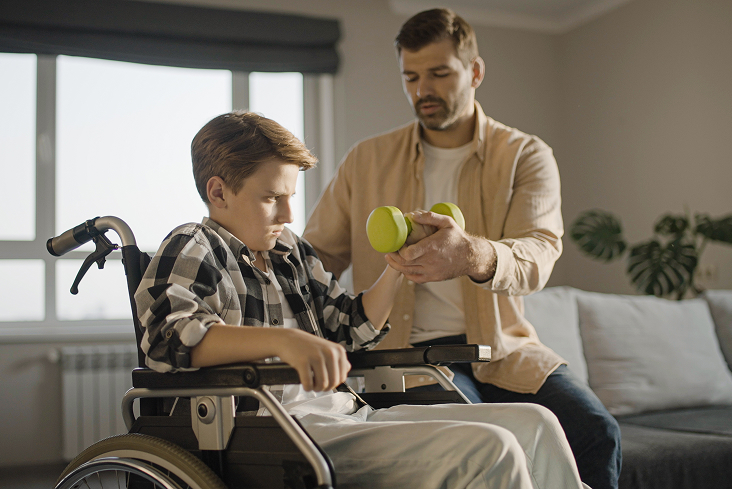
- Resistance bands, light weights.
- Bodyweight training – sit to stand, push-ups from chair.
- Wheelchair push-ups to build arm strength.
- Functional lifting tasks.
Strength equals independence. The stronger the body, the less reliance on others.
Balance and coordination exercises
- Balance boards.
- Stability balls.
- Core strengthening games.
- Walking with support, stepping exercises.
Improves everyday safety. Reduces injuries. Builds confidence.
Cardiovascular and endurance activities
- Swimming and hydrotherapy.
- Cycling with adapted bikes.
- Wheelchair racing.
- Inclusive dance or movement classes.
Cardio keeps the heart strong, builds stamina. Organisations like Sporting Wheelies and Disability Sports Australia run programs across the country.
How disability support workers can assist with physical therapy
They are not physios. But they open up therapy. They console, they help, they advise. They watch for safety. When families are weary, they maintain routines.
Occupational therapy and physiotherapy services
Physiotherapists design the plan. Occupational therapists help with daily function. Support workers follow the guidance, help carry out exercises at home, record changes, provide feedback. Allied health professionals often train support staff to do this safely.
Assisting with home-based therapy exercises
- Helping with stretches on mats.
- Setting up equipment – bands, frames, supports.
- Supervising repetitions.
- Recording progress for therapists.
Consistency makes therapy work. Support workers keep it consistent.
Encouraging daily movement and activity
Therapy doesn’t only happen at set times. Walking across a room. Standing while brushing teeth. Playing catch in the yard. These are therapy too. Support workers encourage these daily movements.
Transportation to therapy sessions
- Driving to hospitals, community health centres.
- Booking accessible taxis.
- Helping pack wheelchairs, braces, equipment.
- Accompanying during long sessions.
Without transport, therapy plans fail. Workers bridge that gap.
Assistive equipment and mobility support
Equipment is part of therapy – walkers, wheelchairs, braces, standing frames. Support workers help maintain, clean, use equipment properly. They often help families apply for new devices through programs like NDIS Assistive Technology.
More resources on cerebral palsy and physical therapy
For families and individuals wanting trusted info:
- Cerebral Palsy Alliance website – therapy and wellbeing services.
- Disability Sports Australia – inclusive sport pathways.
- Cerebral Palsy Sport & Recreation Association NSW – programs for NSW.
- Sporting Wheelies and Disabled Association – sport and recreation in QLD.
- aaa Play – accessible activity directory.
There’s no single path, but therapy helps
Cerebral palsy doesn’t go away. But physical therapy makes life better. It helps kids learn to move, adults stay independent, everyone avoid pain. It’s daily, it’s repetitive, sometimes frustrating. But the results – even small ones – matter. Standing straighter. Walking further. Needing less help. Feeling stronger.
If you’re looking for reliable help and services you can start with:
- Support Network – broad disability support guidance.
- Support Workers at Support Network – skilled workers who assist with therapy at home.
Therapy is not a cure. It’s a tool. A way to give people with cerebral palsy more comfort, more independence, more dignity.